

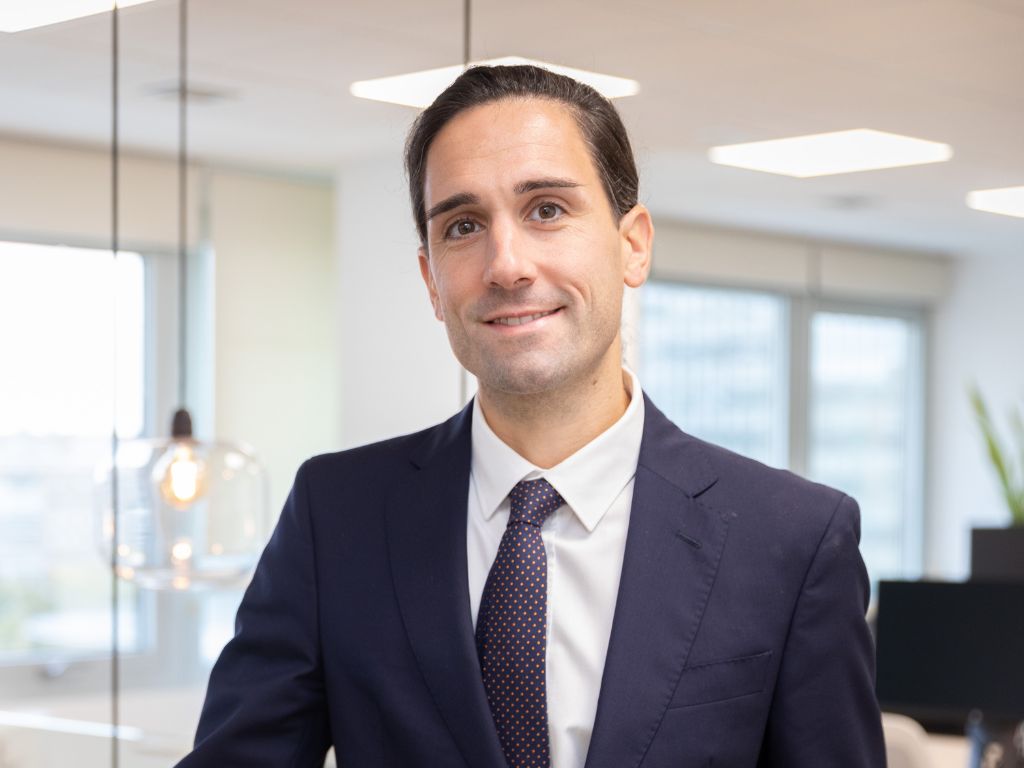
In this edition of Voces de la Cámara, we speak with Luis Perezagua, Country Manager Director at the renewable energy company X-Elio Japan KK, to learn more about his professional journey, experience in Japan, and perspective on leadership, business culture, and opportunities between Spain and Japan.
1. How long have you been in Japan and what brought you here?
I began my professional relationship with Japan in 2015. While based in Spain, I collaborated with Japanese companies involved in the design and construction of advanced cancer treatment facilities, both in Spain and internationally.
At that time, I was working as a university professor and, with the aim of advancing my career, I pursued a PhD in Engineering aligned with my professional experience in management. I decided to leverage the opportunity created by these Japanese collaborations to begin studying the language and to arrange periodic lectures at Japanese universities. During this period, I met a local recruiter who introduced me to the possibility of transitioning into the renewable energy sector.
This represented a particularly compelling opportunity for me, not only because of my growing interest in Japan, but also due to my strong interest in a country that had undergone a significant transformation in its national energy policy.
2. What did you study and how did your career path lead you to your current role?
I studied Industrial Engineering, specializing in energy, and later earned a PhD in Nuclear Engineering.
3. What originally motivated you to pursue an international career?
While living in Spain, I gained diverse experience working with executive teams, starting my own company, and teaching as a university professor. Over time, I felt the need to broaden my horizons and step outside my comfort zone. Combined with my strong interest in Japan, it was the perfect mix when the right opportunity came along.
4. When you first arrived in Japan / started to work with a Spanish Company what aspects of the professional culture stood out to you the most?
Although my first professional experience in Japan wasn’t with a Spanish company, I was surprised by the strong sense of commitment and responsibility, and by the consistently high standards people hold themselves to.
Another key aspect was the emphasis on teamwork and collective decision-making. Compared to more individual-oriented environments, I noticed that decisions often involve consultation and consensus-building, helping ensure stakeholders are aligned. This approach fosters stability and builds long-term trust within the organization.
5. What skills or qualities do you believe are essential for leading teams in Japan?
Leading teams in Japan requires cultural awareness and adaptability, strong communication, especially active listening and a consensus-building, team-first mindset. Reliability and humility matter just as much: people trust leaders who do what they say and respect the group.
6. Looking back at your career so far, is there a moment or decision that significantly shaped your professional path?
Joining X-ELIO to lead its business in Japan has been a pivotal career decision, allowing me to align my professional expertise in a long-standing interest in Japan and my commitment to supporting the transition toward renewable energy.
7. Japan can be a unique business environment. Was there any cultural difference that surprised you when you first arrived?
Tatemae (建前) and honne (本音). Tatemae refers to the public position or the opinion expressed in formal settings, often shaped by the need to maintain harmony and respect group dynamics. Honne, on the other hand, represents a person’s true feelings or personal perspective, which may be shared more selectively in trusted environments.
Dealing with above in both professional and personal atmospheres plus the importance of hearing the silence and reading the atmosphere is critical in daily life.
Additionally, I am surprised with the great commitment and team strength that can be found in Japan.
8. What does a typical day look like as Country Manager Director of X-ELIO Japan?
My day usually starts early: I’m up at 5:00 a.m., I call my mother, and then I go for a 20 km run: techno for the first hour and a podcast for the second. After that, I have breakfast and fit in some gym time while checking emails. Mornings are typically for external meetings, and afternoons are focused on meetings with my team. I have dinner at home, catch up on motorcycle news, and then head to bed.
9. What do you enjoy most about living and working in Japan?
I enjoy the intensity of everyday life and how even small, unexpected delays can turn into moments of learning and connection. I also really value how trustworthy people are, and the feeling of being accompanied, even in silence. All of that heightens your awareness, almost like your five senses are more “awake”, and it’s reinforced by the everyday basics here: the safety, the cleanliness, and the overall sense of order.