


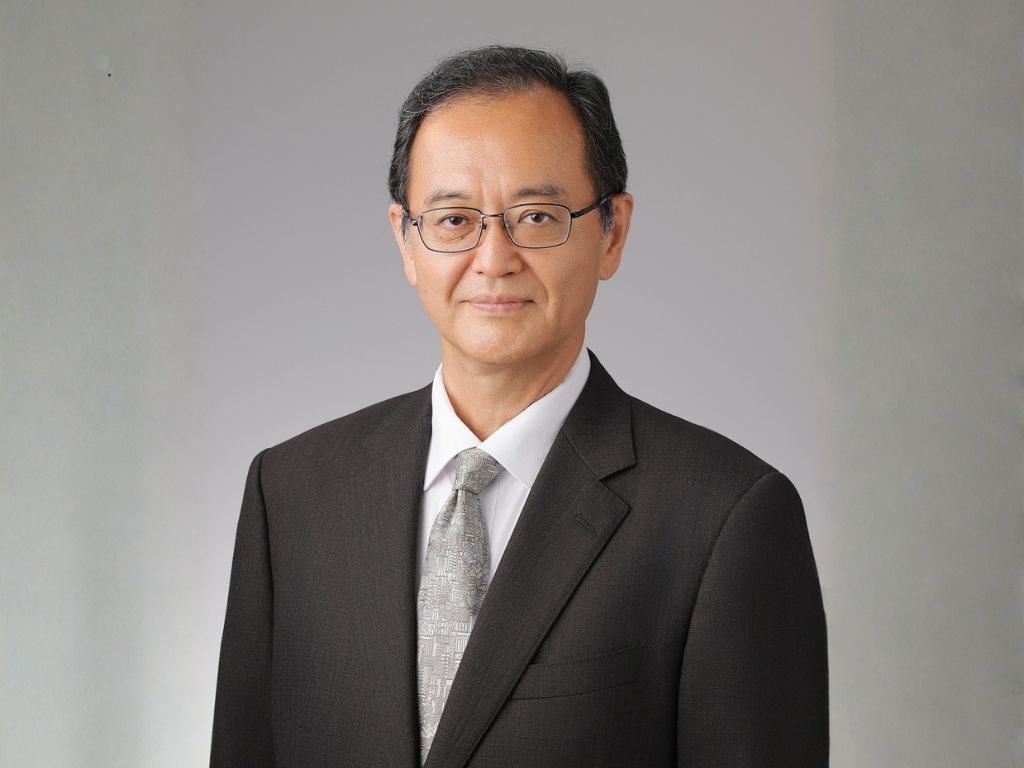
In this edition of Voces de la Cámara, we speak with Takahiro Nakamae, Former Ambassador of Japan to Spain, to learn more about his diplomatic career, his connection with Spain, and his perspective on Japan–Spain relations, diplomacy, culture, and international cooperation.
1. What motivated you to pursue diplomacy? Did you always know you wanted to be a diplomat, or did it develop over time?
I have to be frank. In high school, I realized I couldn’t understand physics classes, so I gave up on a career in the exact sciences and enrolled in the Faculty of Law at university. But there, studying codes and case law was not something I enjoyed at all. Instead, I became more interested in how relations between sovereign states work—a field where codes and jurisprudence hardly have any authority. In the end, I completed my degree without passing enough courses in civil or procedural law. There was no other place that would accept me.
2. Could you briefly walk us through your diplomatic career? In which countries and roles were you posted?
Of the forty years of my diplomatic career, I devoted nineteen to relations with Latin America and the Caribbean. I had the fortune of working in Mexico, Brazil, and Argentina, and of traveling to almost all the countries in the region, as well as the major Caribbean states. I served as Consul General in São Paulo and as Ambassador to Argentina. In Tokyo, I had the honor of assisting the Prime Minister and the Minister of Foreign Affairs as Director-General for Latin America and the Caribbean. I also worked for eight years with international organizations such as the OECD and the UN.
In Spain, I spent the most rewarding five years of my professional career: two as a young trainee diplomat and three as Ambassador. As a special assignment, I also had the privilege of working at the embassy in Baghdad shortly after the war.
3. Is there any country that particularly marked you on a personal level? What made that experience so meaningful?
It is difficult to choose just one. In Spain, I traveled 54,000 kilometers by car, and by driving along local highways, I discovered the country’s historical richness and cultural diversity. It was an invaluable experience. I would even dare to say I could be a rather unconventional tour guide in Spain.
Argentina is the country where I lived the longest outside Japan. I found the culture and people of Buenos Aires truly unique. São Paulo is home to the largest Japanese community in the world, with more than one million people. For a Japanese diplomat, working there feels like playing football at home. Mexico is a country with an incomparable pre-Hispanic history and a completely justified sense of cultural pride. Iraq is also a country of exceptional culture; thanks to my involvement in post-war reconstruction, I was able to understand the complexity of the “clash of civilizations.”
4. How did your diplomatic career lead to your appointment as Ambassador of Japan to Spain? How long did you hold that position?
To be honest, I was surprised when I was informed of my appointment as Ambassador to Spain, since I had not worked on relations with that country for more than thirty years and considered myself a specialist in Latin America rather than Europe. Frankly, at first, I found it quite difficult to prepare for the post. I held this position for three years, from September 2022 to November 2025.
5. During your time in Spain, what cultural similarities or differences stood out to you? Did your perception of Spain or Europe change in any way?
The Spain I knew between 1986 and 1988 was a country just entering the European Community. I remember my university friends were very excited. “Now we are Europeans,” they would say. Today, Spain has changed extraordinarily. Not only is it more economically prosperous, but it is also fully integrated into the global economy and has become a major player in European politics and economics.
“Europeanism” is often discussed. This philosophy clearly forms a fundamental part of Spanish identity, in a very conscious and visible way.
In everyday life, the charm of bars and cafés remains intact, but I must admit I miss, in Madrid’s old town, the bars with floors covered in napkins and shrimp shells. I suppose I have to blame international tourism for that.
6. You became quite well known in Spain on social media for your closeness to our culture and cuisine… were you aware of this? And now the obligatory question: what is your favorite Spanish dish?
Today, social media has become an essential means of direct communication with the public. Almost all politicians, and even royal households, use it worldwide to convey their messages. In fact, it has become a fundamental part of modern democracy.
In diplomacy as well, we are increasingly expected to promote public diplomacy. In that sense, social media is a tool that helps us reach public opinion directly.
As for Spanish food, since I had the honor of serving as the official speaker at the Festa do Cocido de Lalín 2025, I feel a special commitment to that city. Therefore, my answer is Cocido de Lalín. That said, it is not a dish meant for everyday consumption.
7. How would you describe the evolution of Japan–Spain relations in recent years? What areas of cooperation have the most potential?
Bilateral relations are currently at a particularly favorable moment. There is still considerable room to expand cooperation in areas such as renewable energy, information technology, and tourism. Recently, it has become increasingly clear that peace in the Euro-Atlantic and Indo-Pacific regions is closely interconnected, making defense cooperation particularly relevant.
Culturally, Japanese and Spanish people feel a genuine mutual attraction. In addition, the cordial and friendly relationship between the royal families is an essential pillar for both peoples.
8. What skills or qualities do you consider essential for a diplomat? Have they changed over time?
Understanding and adapting to different cultures. Curiosity to discover the unknown. Appreciation of your own culture and the ability to explain it. Patience and optimism in the face of reality. And perhaps, a strong stomach.
9. What is a typical day in the life of an ambassador like?
Most of the time, I was reading and learning. To prepare for conferences, interviews, meetings, or any other events, I usually needed a considerable amount of time.
When I had no obligations, I would watch the news, as it quickly informed me about what was happening. It also helped me learn about politicians, business leaders, and other important figures, and understand the topics that interested them.
Personally, I like going out and walking. You learn a great deal in the streets: people’s moods, fashion trends, new developments in food, the presence of Japanese culture and how it is received, as well as tourism trends and more.
When traveling within the country, the usual program included meeting political leaders, speaking with businesspeople, visiting universities, and, if possible, giving lectures to students and interviews to the local press. Whenever I could, I also tried to visit the local market, as it offered valuable insight into how people live.
10. What do you consider the most difficult or demanding part of being an ambassador?
Making decisions is always difficult. I suppose this is common for anyone in a leadership position. On some occasions, though not many, I felt that my choices could affect the interests of many people and would also become subject to public scrutiny. That made me nervous.
Today, any event or behavior spreads very quickly through social media. There are people who recognize you even if you do not know them. Walking down the street and being greeted by strangers makes me happy. However, it also gives the impression that you are constantly being observed. Therefore, one must always behave properly. As the son of an ordinary citizen, I am not used to living like this.
11. After your retirement, how would you like to continue maintaining the close relationship between Spain and Japan in this new stage of your life?
Fortunately, I am sometimes invited to give lectures. That encourages me to keep learning and staying up to date. I would also like to meet Spanish people living in Japan. I hope events organized by the Chamber of Commerce will provide opportunities for connection. I also want to maintain and expand my academic contacts. Exploring and developing the potential between Japan and Spain is a topic that still deserves further attention.
For several months now, I have been writing articles in Spanish on Substack about Japan and its international relations. Throughout my career, I have always felt that information and analysis about my country in Spanish are rather limited. My goal is to publish once or twice a month.